© 2026 ACB Realty, Inc. All rights reserved.

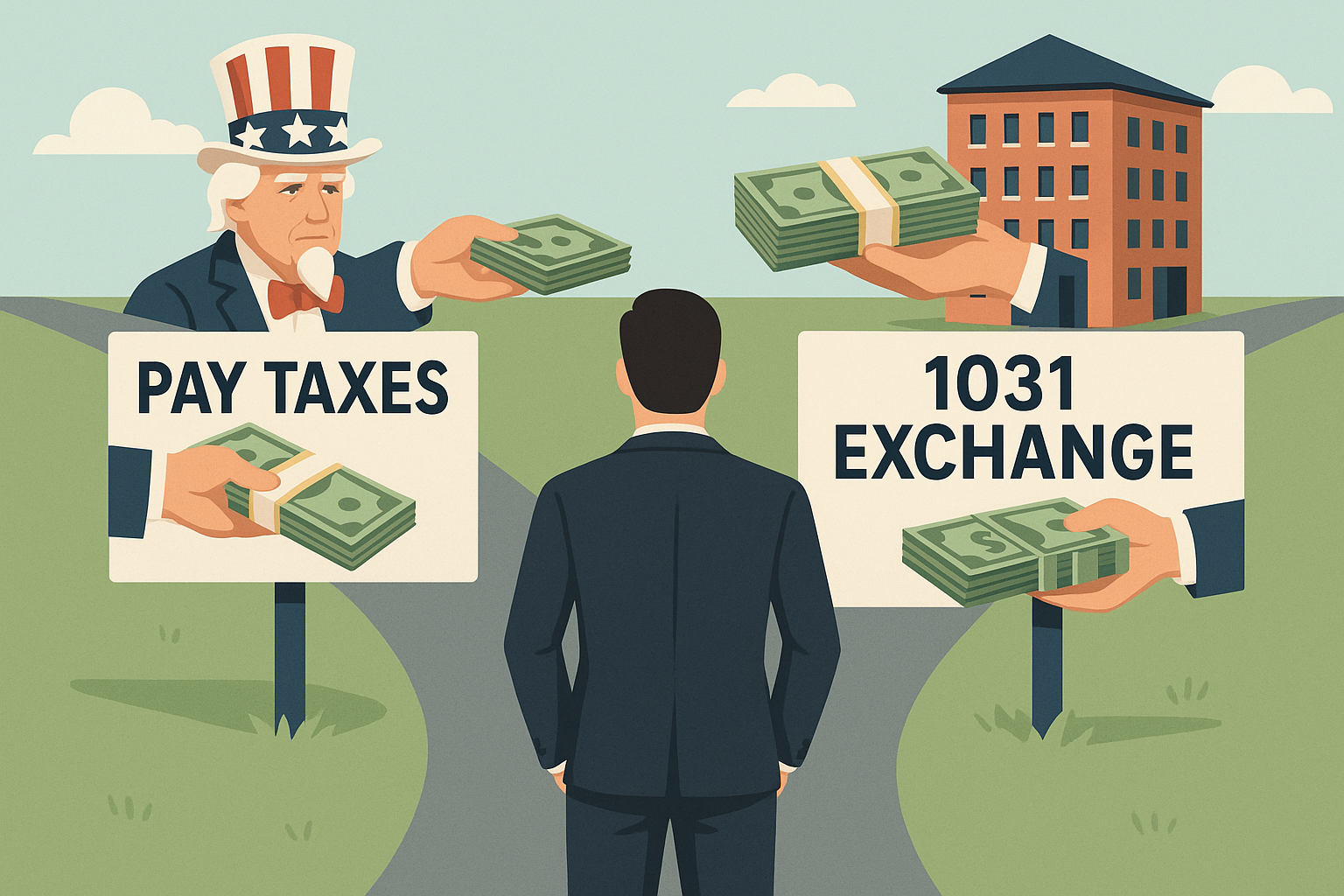
A 1031 exchange lets you sell an investment property and put the full proceeds into a new one, instead of paying capital gains tax now. We help you sell, find the right replacement property, and stay on the strict IRS timeline.
Prefer to call? (781) 356-2552
A 1031 exchange is named after Section 1031 of the Internal Revenue Code. It lets you defer taxes when you sell an investment or business property and buy another “like-kind” property.
Instead of sending part of your gain to the IRS, you keep your equity working for you. Investors use it to trade up to larger properties, spread out into several properties, or move into investments that take less time to manage.
Watch our 1031 exchange video
Put off capital gains and depreciation recapture taxes when you sell.
Keep your full equity working to buy a larger or better property.
Sell one property and buy several, in different towns or property types.
Trade a high-maintenance property for one that takes less of your time.
A new property can give you a new depreciation schedule. Ask your tax advisor how this applies to you.
Under current tax law, heirs may receive a stepped-up basis, which can reduce or remove the deferred gain.
The deadlines are strict, and the clock starts the day you sell. Planning ahead is the key to a smooth exchange.
Talk with your tax advisor and a Qualified Intermediary before you list.
The intermediary holds your sale proceeds. You never take the money yourself.
We market and sell your current investment property.
Name your possible replacement properties in writing within 45 days.
Finish the purchase within 180 days, or by your tax return due date if that comes first.
Both properties must be real estate held for investment or business use. Your primary home does not qualify.
To defer all of the tax, buy property of equal or greater value and reinvest all of your net proceeds. Cash you keep may be taxed.
The person or entity that sells the old property must be the same one that buys the new property.
A Qualified Intermediary must hold the funds. If you receive the sale proceeds yourself, the exchange can fail.
Identify up to three possible properties, no matter what they are worth.
Identify any number of properties, as long as their total value is no more than twice the value of the property you sold.
Identify any number of properties of any value, but you must buy at least 95% of the total value you identified.
Single-family rentals, multifamily buildings, commercial property, or land.
Passive shares in larger, professionally managed properties.
Shared ownership of a larger property with other investors.
Properties where the tenant pays the taxes, insurance, and upkeep.
We are investors too, so we understand what is at stake. We work closely with your Qualified Intermediary and tax advisor so every real estate step lines up with your exchange.
ACB Realty is not a Qualified Intermediary or a tax advisor. We handle the real estate side, and we can refer you to trusted professionals for the rest.

This page is general information only. It is not tax, legal, or financial advice. Tax laws can change, and every situation is different. Talk with a qualified tax advisor and a Qualified Intermediary before starting a 1031 exchange.
Start the conversation before you list. The earlier we plan, the smoother your exchange will be.